ORSOLYA

Layers of Memory is a cartographic collage that weaves Debrecen’s past—from the late 19th-century expansion when peripheral gardens were rezoned into new urban districts—with its current ambitions and future trajectories. Driven by a desire to understand the city's urban morphology, this project explores the forces that shaped its physical form. It examines how Debrecen's distinctive spatial structure emerged, how its wide streets developed into their contemporary configuration, and how its historical gardens and the Hortobágy continue to define its identity and evolution.
The artwork can be understood as a patchwork of layers of varying quality: a composition of layers with different levels of permeability. At one end of this spectrum lies the “exposed earth” or “bare ground,” which possesses the highest degree of permeability and bears the traces of human, animal, and vegetal lives—the marks of births and deaths embedded within the landscape. At the opposite end are the newly constructed structures on the city's periphery: buildings whose sealed forms reveal nothing of their interiors and thus embody a state of extreme impermeability.
Elements with a high degree of permeability are more closely aligned with what may be understood as a "living entity." Areas characterized by greater permeability tend to be more vulnerable within the urban environment. At the same time, however, they offer increased flexibility and adaptability for the city's inhabitants. The map is presented as a collage that reflects the varying levels of interconnectivity and interdependency among these layers, each possessing a different degree of permeability and quality.
The work was part of the project called Cultivators of Life, initiated by tranzit.ro/Bucharest Association in partnership with MODEM – Center for Modern Contemporary Art in Debrecen
The artwork can be understood as a patchwork of layers of varying quality: a composition of layers with different levels of permeability. At one end of this spectrum lies the “exposed earth” or “bare ground,” which possesses the highest degree of permeability and bears the traces of human, animal, and vegetal lives—the marks of births and deaths embedded within the landscape. At the opposite end are the newly constructed structures on the city's periphery: buildings whose sealed forms reveal nothing of their interiors and thus embody a state of extreme impermeability.
Elements with a high degree of permeability are more closely aligned with what may be understood as a "living entity." Areas characterized by greater permeability tend to be more vulnerable within the urban environment. At the same time, however, they offer increased flexibility and adaptability for the city's inhabitants. The map is presented as a collage that reflects the varying levels of interconnectivity and interdependency among these layers, each possessing a different degree of permeability and quality.
The work was part of the project called Cultivators of Life, initiated by tranzit.ro/Bucharest Association in partnership with MODEM – Center for Modern Contemporary Art in Debrecen
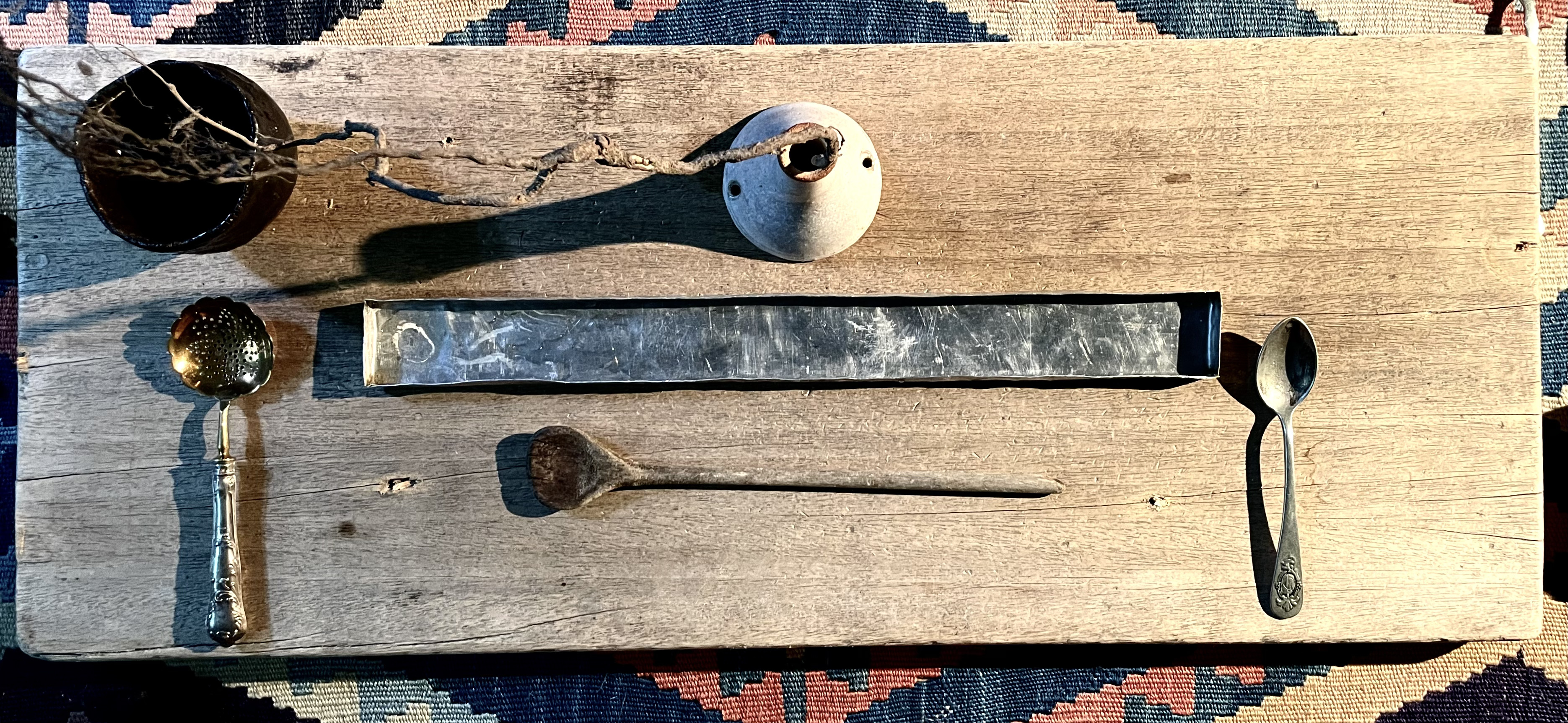
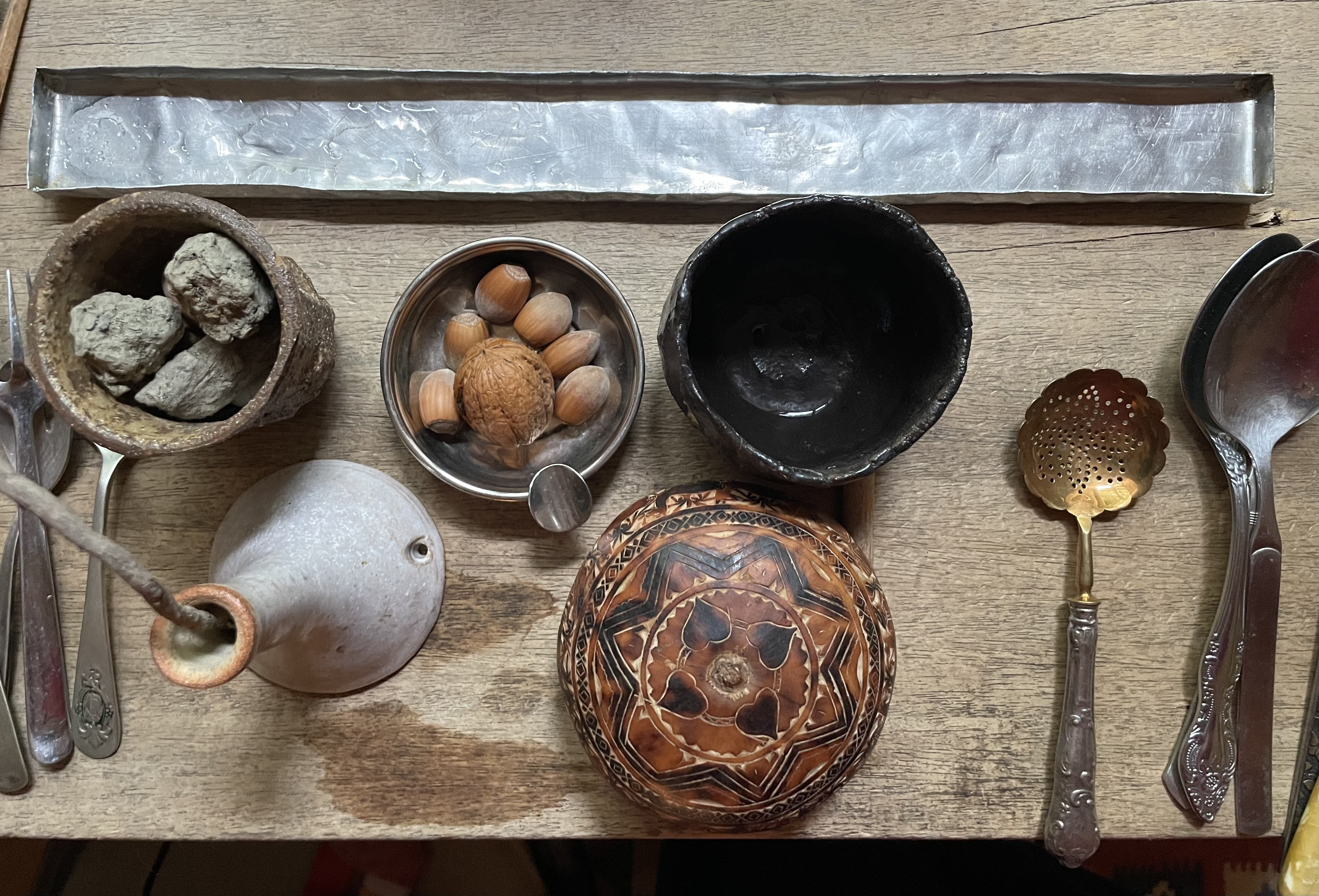
This production based on a folk tale from southern Romania, combines storytelling and object theatre, using spoons as performative objects and live music. It is intended for both children and adults.
Short description:
Jánoska, the son of a poor widow, goes into the forest to collect wild apples, carrying only a crust of bread, the last food left at home. He shares his meal with a beggar and is rewarded with a golden apple tree. The story follows Jánoska as he learns how to deal with his sudden good fortune. In keeping with the tradition of folk tales, his journey eventually leads him to the emperor’s court, where he asks for the hand of the emperor’s daughter.
Short description:
Jánoska, the son of a poor widow, goes into the forest to collect wild apples, carrying only a crust of bread, the last food left at home. He shares his meal with a beggar and is rewarded with a golden apple tree. The story follows Jánoska as he learns how to deal with his sudden good fortune. In keeping with the tradition of folk tales, his journey eventually leads him to the emperor’s court, where he asks for the hand of the emperor’s daughter.
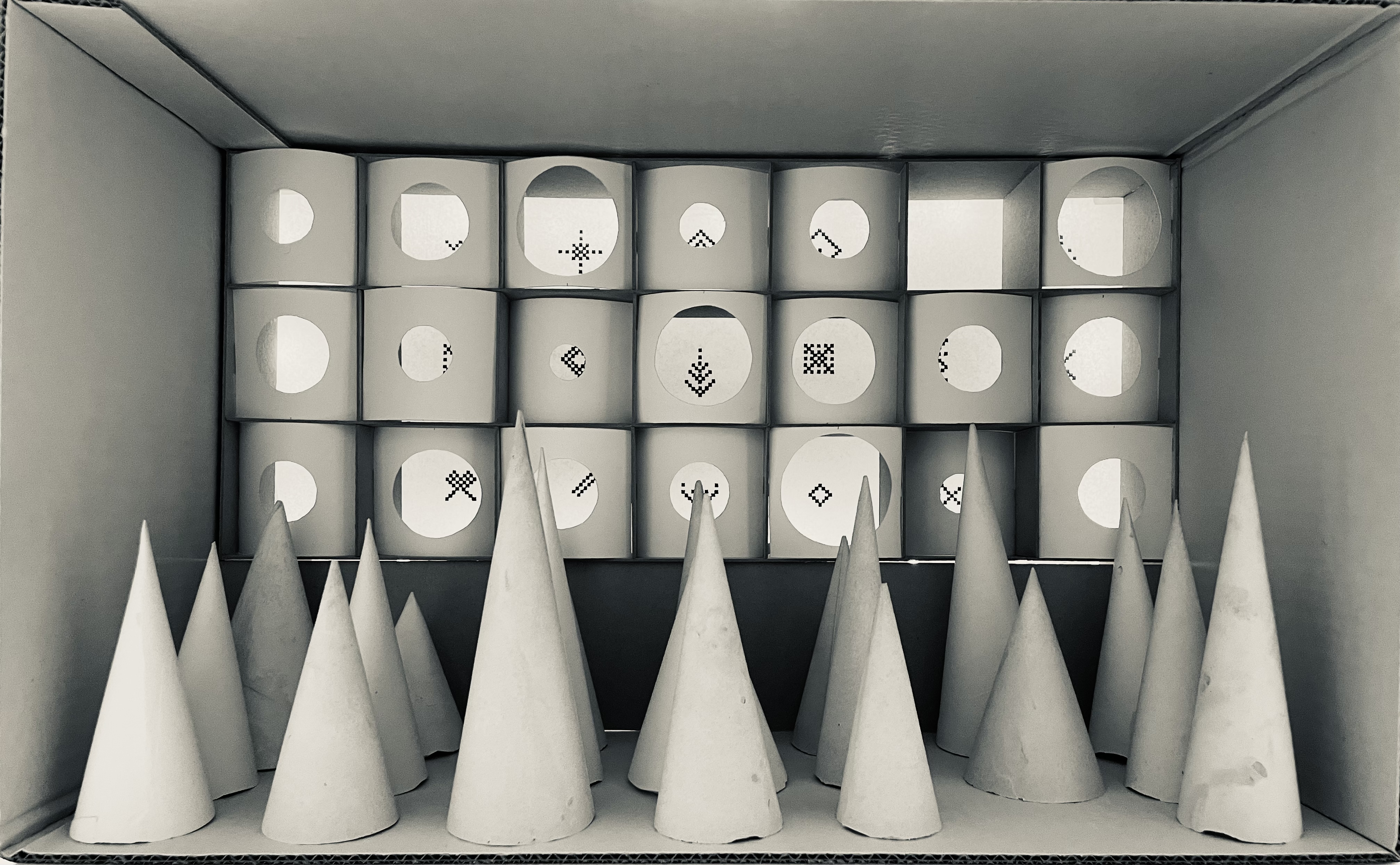
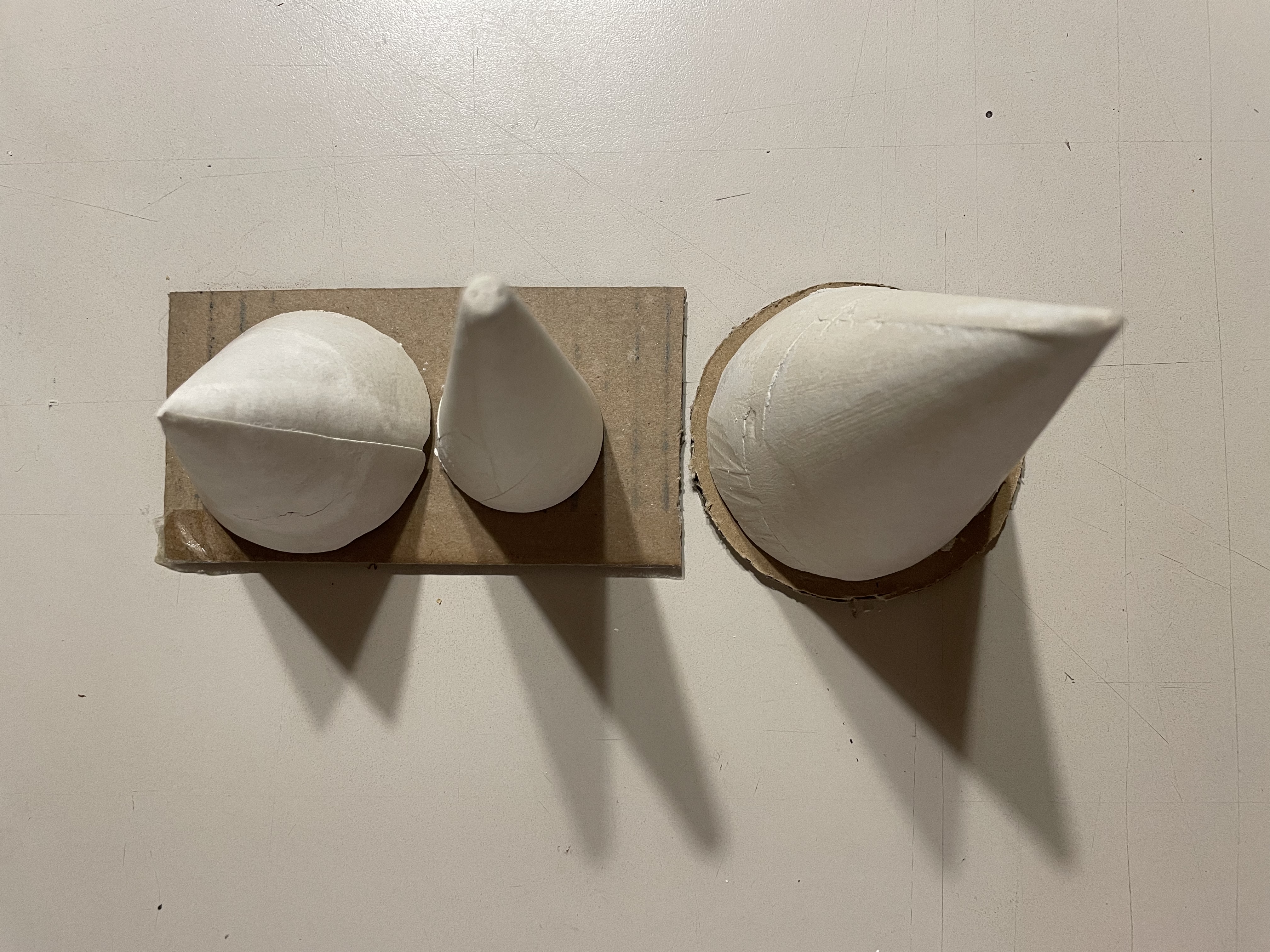
The work proposed for DOM.ESTIC explores the question of what guides people when choosing a home or collaborating with an architect in the design process. What motivates certain decisions over others? And what does “living” symbolize in today’s society?
The installation brings together the desires, dreams, and cultural models that shape our choices, placing them alongside a symbolic structure of homes: a fragile grid made of paper, composed of identically sized squares. Like birdhouses, each unit has an opening of a different diameter, depending on the species it is meant to shelter. Beyond the messages conveyed through position, materials, architectural language, and degrees of openness or enclosure, the central question remains: what do homes actually conceal? If we imagine them as tightly sealed bottles cast into the sea, each containing a message, a dream, or a longing, what would we find inside?
The two perpendicular planes of the installation represent parallel projections of the same reality: on one hand, the physical space that frames and contains life within its walls; on the other, the imagined life—the dream or ideal image of living—that, in turn, shapes and defines that physical space.
The work was part of the exhibition DOM.ESTIC organised by BATRA 2025 in Cluj - Napoca
The installation brings together the desires, dreams, and cultural models that shape our choices, placing them alongside a symbolic structure of homes: a fragile grid made of paper, composed of identically sized squares. Like birdhouses, each unit has an opening of a different diameter, depending on the species it is meant to shelter. Beyond the messages conveyed through position, materials, architectural language, and degrees of openness or enclosure, the central question remains: what do homes actually conceal? If we imagine them as tightly sealed bottles cast into the sea, each containing a message, a dream, or a longing, what would we find inside?
The two perpendicular planes of the installation represent parallel projections of the same reality: on one hand, the physical space that frames and contains life within its walls; on the other, the imagined life—the dream or ideal image of living—that, in turn, shapes and defines that physical space.
The work was part of the exhibition DOM.ESTIC organised by BATRA 2025 in Cluj - Napoca

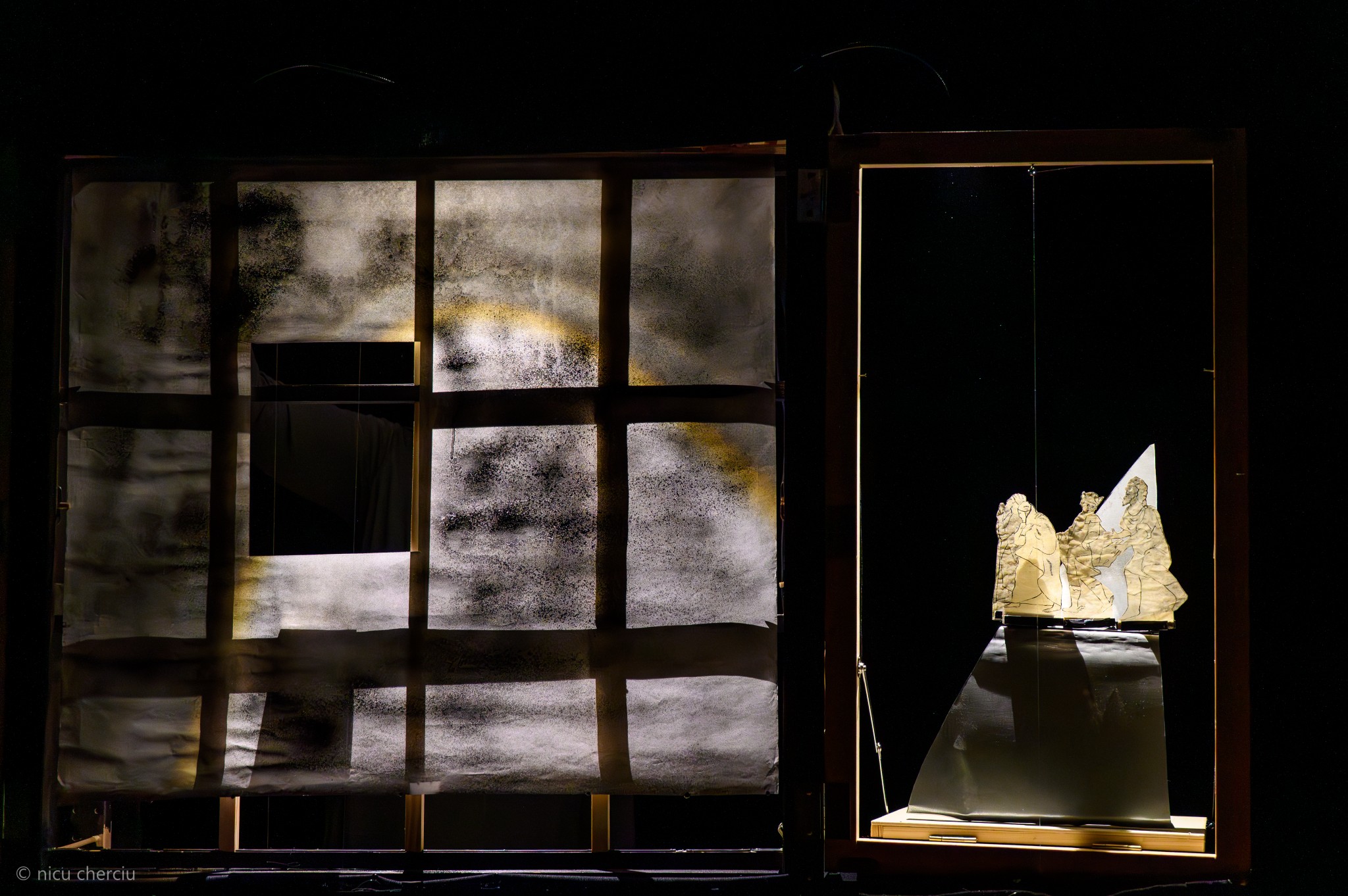
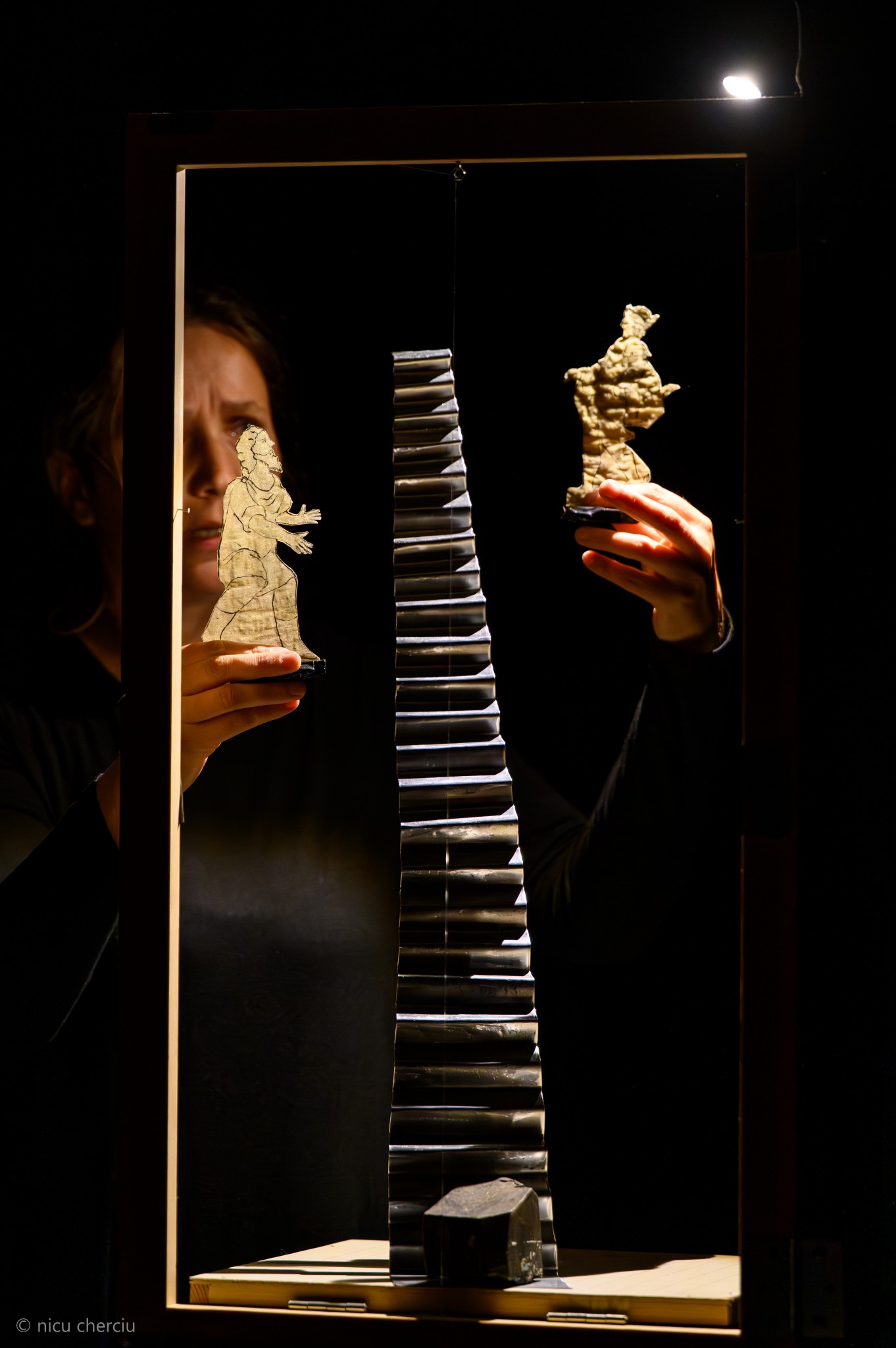

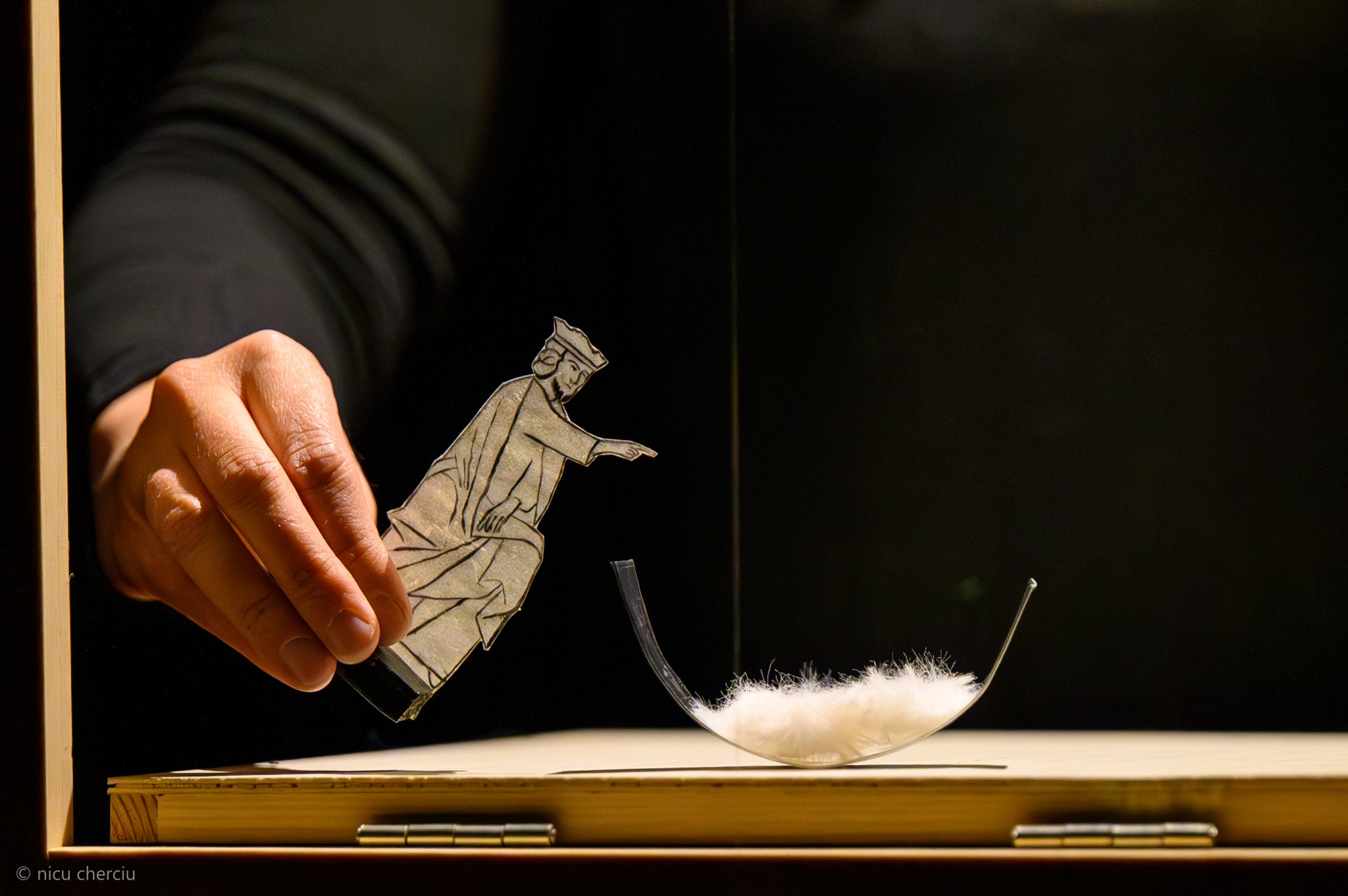
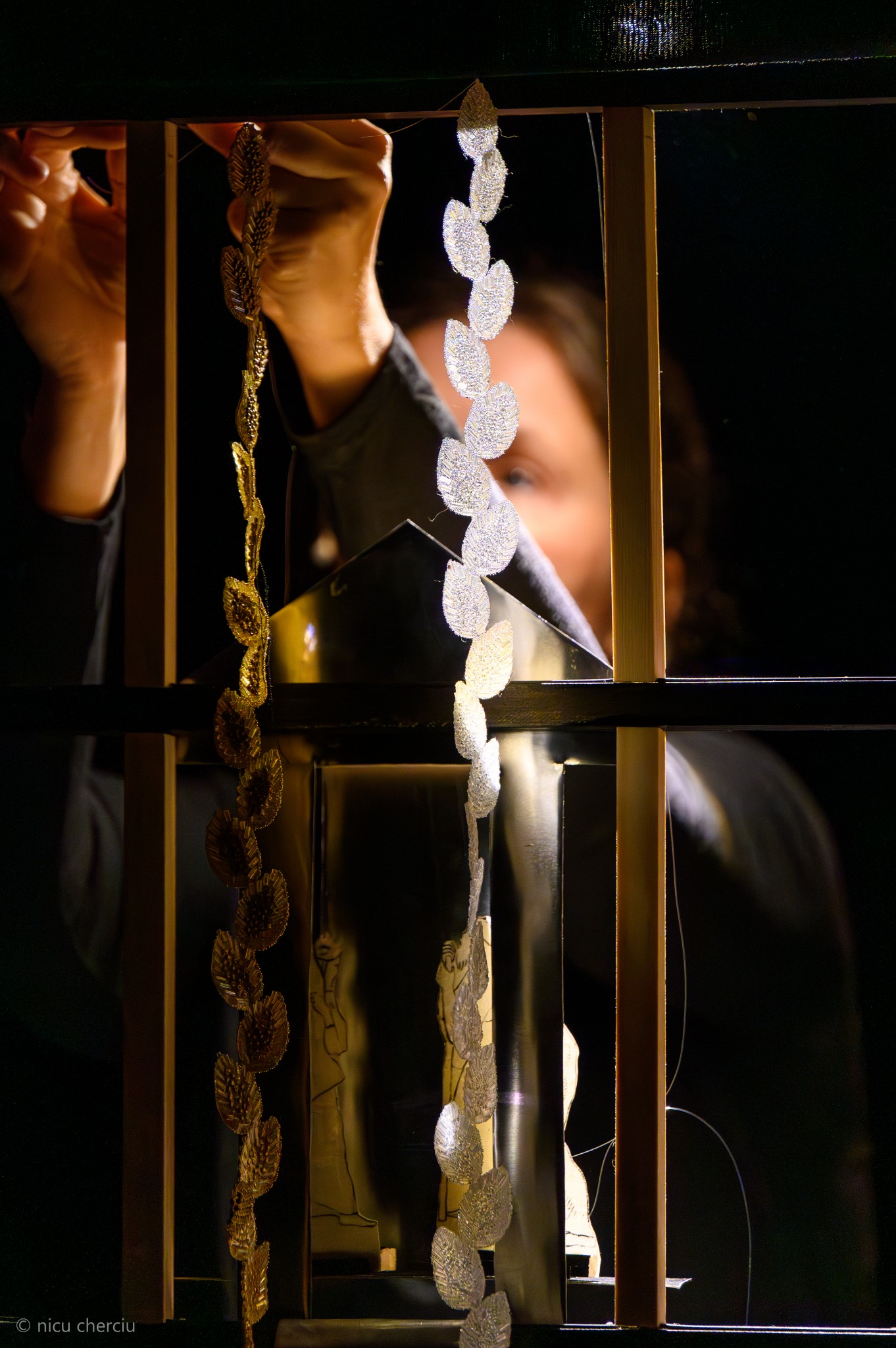
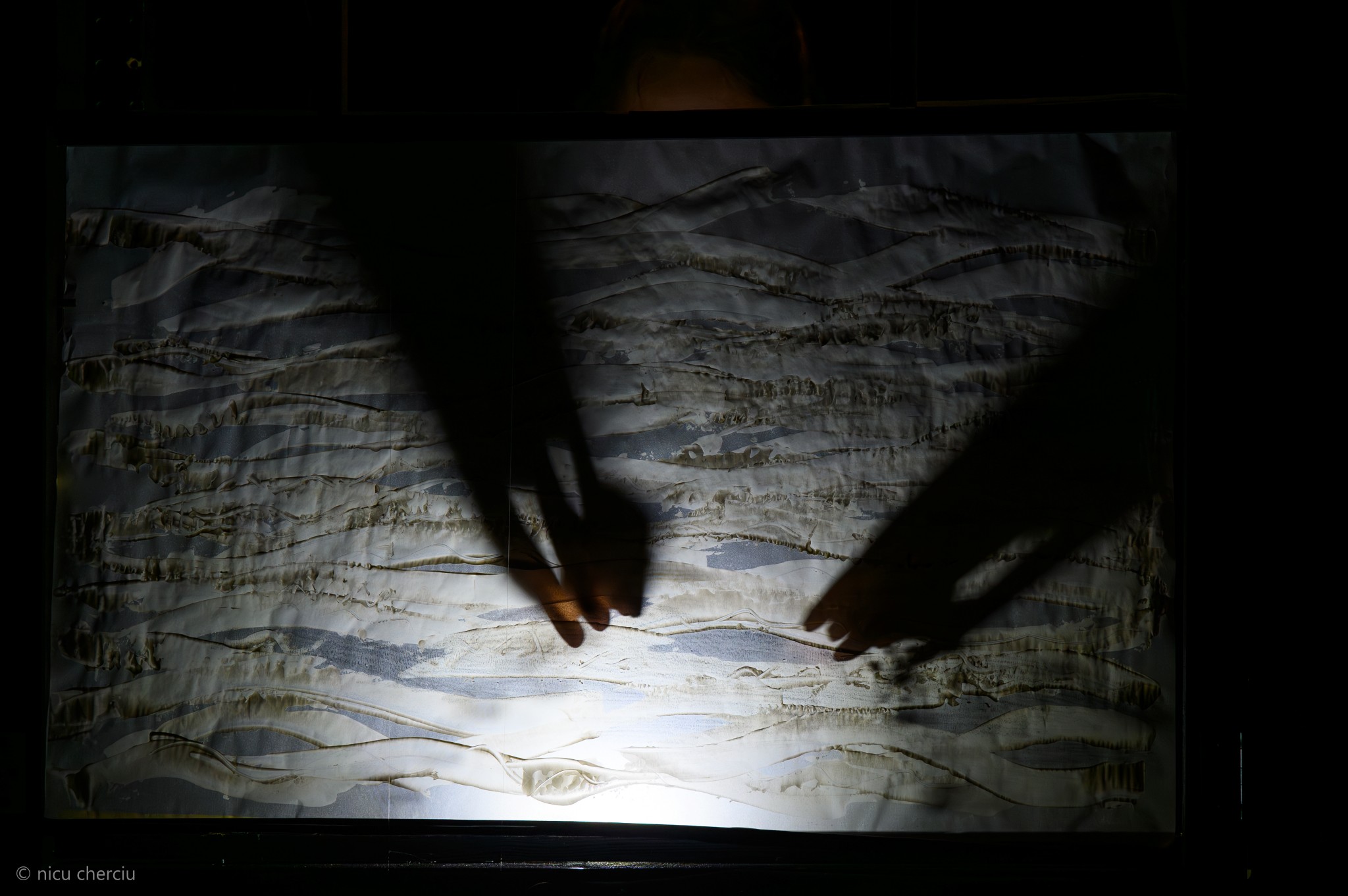

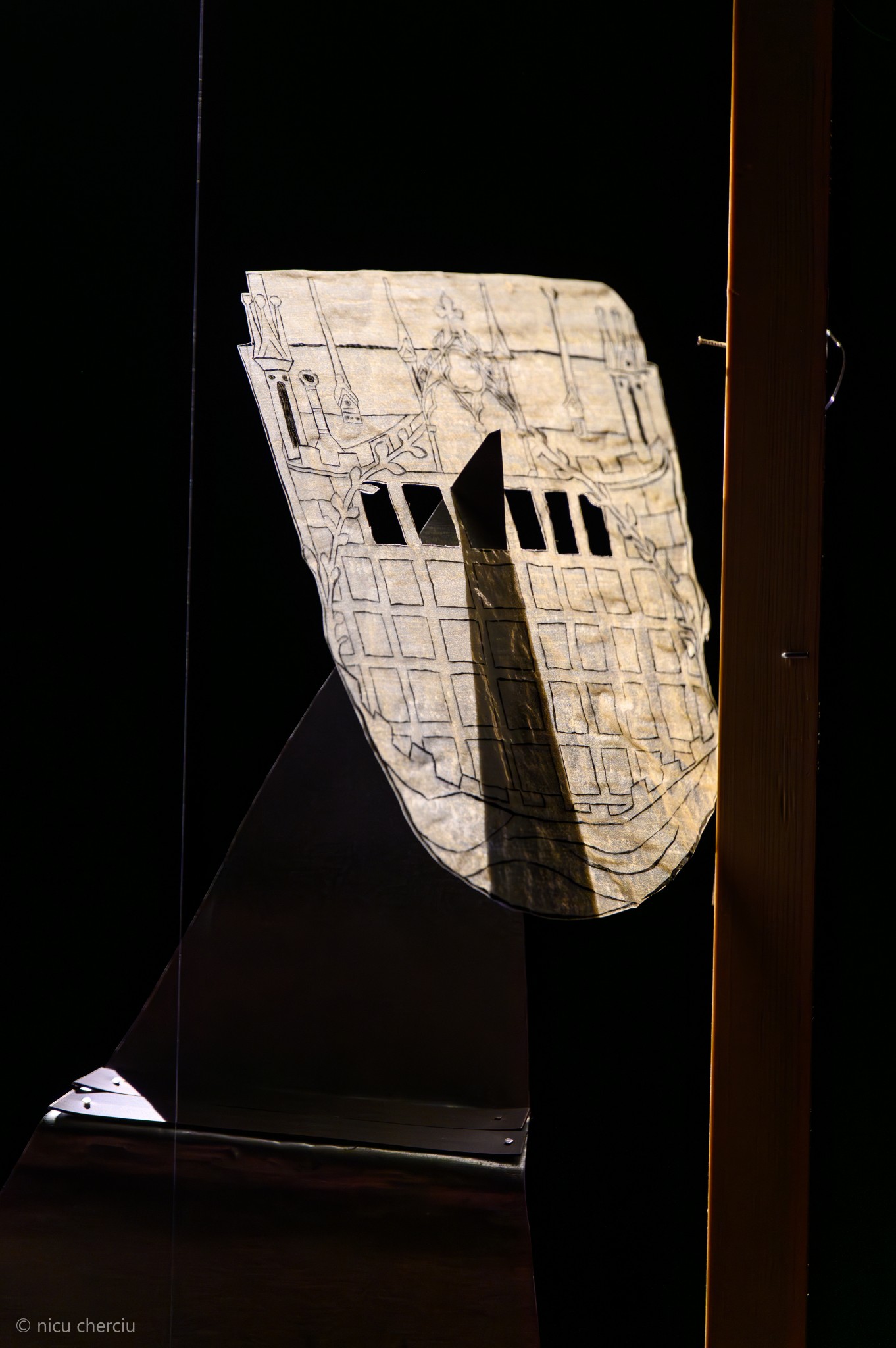
The show is inspired by scenes from paintings depicting moments from Greek mythology or hagiography. It takes successive or simultaneous events that appear in the painting on the same canvas or different paintings, and transposes them into a narrative structure of 5 stories, animated by two-dimensional figures in an abstract scenographic box. The starting point is also in old texts or their interpretations. In an attempt to continue the tradition of storytelling, stories about love, power, fate or initiation are rejected, stories from the past, which can however be considered current at any time.
The performance unfolds through five emblematic stories drawn from different cultural and spiritual traditions, each reflecting on ethics and human destiny. It begins with the tale of Philemon and Baucis from Ovid, portraying the elderly couple as timeless symbols of hospitality and generosity. The scene then shifts to the legend of Saint Ursula and her maidens, evoking devotion, faith, and the ideal of purity. At the heart of the show, a wordless visual sequence—The Flood —interweaves elements from various flood mythologies, distilling their shared imagery and universal message into a powerful theatrical climax. This is followed by the dramatic story of Mariamne, the Jewish princess and wife of Herod I, a narrative of love, jealousy, and crime. The performance concludes with the legend of Saint Christopher, a reflection on faith and human kindness.
The project was realised with the support of Centrul de Proiecte Timișoara, through the program “Energie! Burse de creație”
The performance unfolds through five emblematic stories drawn from different cultural and spiritual traditions, each reflecting on ethics and human destiny. It begins with the tale of Philemon and Baucis from Ovid, portraying the elderly couple as timeless symbols of hospitality and generosity. The scene then shifts to the legend of Saint Ursula and her maidens, evoking devotion, faith, and the ideal of purity. At the heart of the show, a wordless visual sequence—The Flood —interweaves elements from various flood mythologies, distilling their shared imagery and universal message into a powerful theatrical climax. This is followed by the dramatic story of Mariamne, the Jewish princess and wife of Herod I, a narrative of love, jealousy, and crime. The performance concludes with the legend of Saint Christopher, a reflection on faith and human kindness.
The project was realised with the support of Centrul de Proiecte Timișoara, through the program “Energie! Burse de creație”


Everyday Work materializes the artist’s exploration of the balance between the inner need to create, to preserve spiritual and intellectual freedom, and the transformation of curiosity into monotony—the demands of the work that provides us with everything necessary for survival. The idea for this work emerged from an internal conflict: on the one hand, a resistance to the constant pressure for novelty, to the expectation of continually finding and producing something new under the constraints of material necessity and time, seeking instead refuge in repetition and the comfort of the predictable; on the other hand, a creative spirit that recognizes the need to respond to the real challenges of our time, to take shape in a manner that is coherent, aesthetically compelling, sincere, and complex, while remaining meaningful and useful to society.
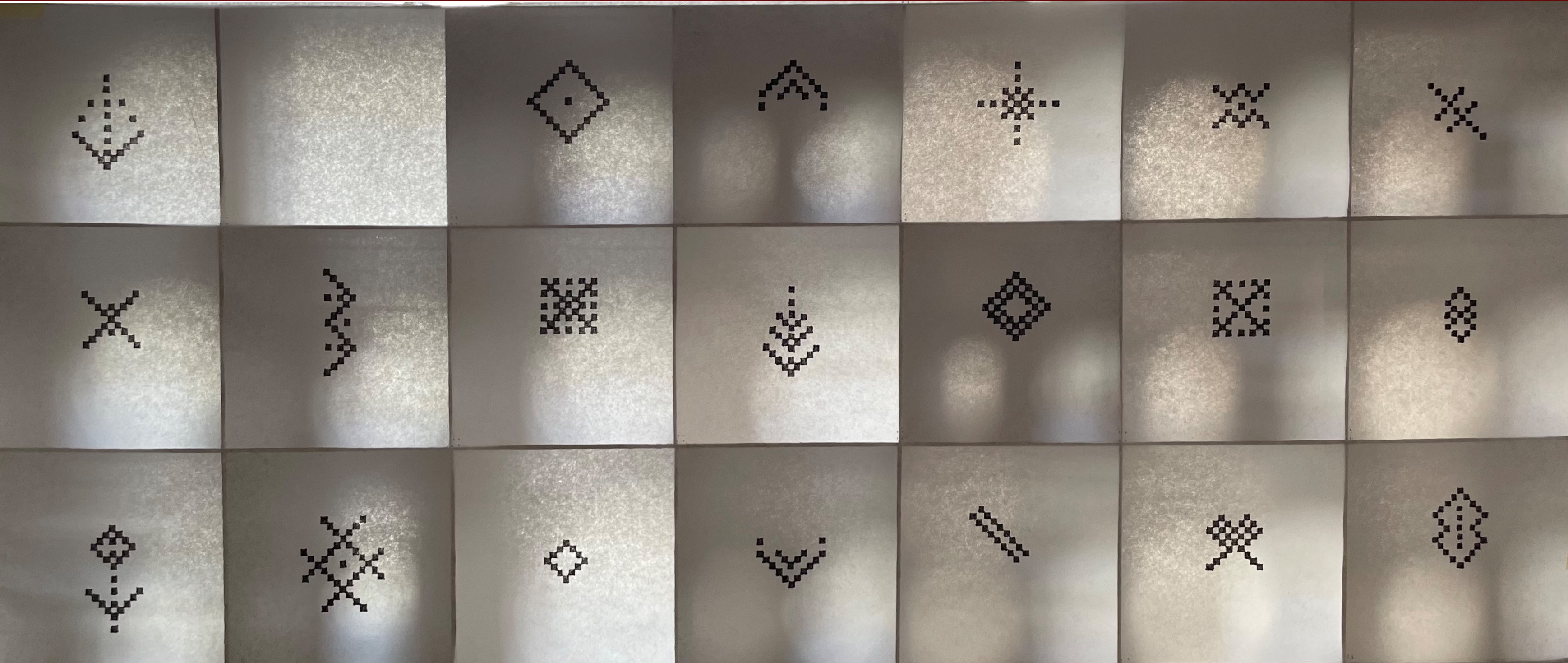
Everyday Work is a meticulously crafted “rug” made of transparent paper. It alludes both to the textiles traditionally woven by women in the past to become part of a family’s dowry or household furnishings—objects created for domestic comfort rather than with the ambition of becoming art, yet often transcending mere utility to achieve the status of masterpieces—and to the workers’ attendance register of the communist period, a daily record tied to the fulfillment of a required work quota. The work oscillates between these two references and the notion of the artwork itself.
Because the rug is made of paper, it becomes a non-functional object, produced with the precision and care of a factory worker, in the hope that the “dowry” created over the course of these three months will ensure our survival—for at least three months.
The rug’s defining feature is that its pattern records working days, periods of rest during working days, days off, and holidays—markers that hold significance only for the artist. The pattern was created by hand stitching on white tracing paper, drawing on the tradition of textile objects made for a different purpose and according to consciously applied rules, while employing materials that are unconventional to this practice.
The work can only be fully perceived when it is backlit; the pattern becomes clearly visible only in the presence of a light source behind it. The process of creating the pattern also serves a purpose similar to that of drawing a Tibetan mandala: it is a meditative act intended to calm and relax the mind.
The project was realised with the support of Centrul Cultural Clujean during Cluj în rezidență residency
Everyday Work is a meticulously crafted “rug” made of transparent paper. It alludes both to the textiles traditionally woven by women in the past to become part of a family’s dowry or household furnishings—objects created for domestic comfort rather than with the ambition of becoming art, yet often transcending mere utility to achieve the status of masterpieces—and to the workers’ attendance register of the communist period, a daily record tied to the fulfillment of a required work quota. The work oscillates between these two references and the notion of the artwork itself.
Because the rug is made of paper, it becomes a non-functional object, produced with the precision and care of a factory worker, in the hope that the “dowry” created over the course of these three months will ensure our survival—for at least three months.
The rug’s defining feature is that its pattern records working days, periods of rest during working days, days off, and holidays—markers that hold significance only for the artist. The pattern was created by hand stitching on white tracing paper, drawing on the tradition of textile objects made for a different purpose and according to consciously applied rules, while employing materials that are unconventional to this practice.
The work can only be fully perceived when it is backlit; the pattern becomes clearly visible only in the presence of a light source behind it. The process of creating the pattern also serves a purpose similar to that of drawing a Tibetan mandala: it is a meditative act intended to calm and relax the mind.
The project was realised with the support of Centrul Cultural Clujean during Cluj în rezidență residency